![Game Jams and Challenges: My Experience with [Game Jam Name]](/assets/image/GameJams/0.jpeg)
GameModHub 10 min read Game Development
Game Jams and Challenges: My Experience with [Game Jam Name]
Hey everyone! I recently participated in [Game Jam Name] and wanted to share my experience with you all. Game jams are always a whirlwind of creativity, stress, and learning, and this one was no exception. From choosing the jam and interpreting the theme to developing the game and reflecting on the lessons learned, here’s a breakdown of my journey.
1. Choosing the Jam & Theme
Why did you join this game jam?
I joined [Game Jam Name] because I’ve always wanted to challenge myself in a time-constrained environment. The idea of creating a game from scratch in just a few days (or hours!) is both thrilling and terrifying, and I was eager to see what I could come up with under pressure. Honestly, I’ve been itching to step out of my comfort zone for a while—coding small personal projects is fun, but there’s something uniquely exhilarating about the chaos of a game jam. Plus, I’d heard from friends how addictive the rush of finishing a game against a tight deadline could be, and I wanted to experience that for myself. It’s like a creative boot camp, and I was ready to sign up!
What was the theme, and how did you interpret it?
The theme for this jam was "Lost and Found." I interpreted it as a game where the player has to navigate through a series of mazes to find lost artifacts. The concept of being "lost" in a maze and "finding" hidden items felt like a natural fit, and I was excited to build something around that idea. I brainstormed a bunch of possibilities at first—like a narrative-driven adventure or a survival horror game—but the maze idea stuck because it’s simple yet versatile. I imagined the player as an explorer, piecing together a forgotten world one artifact at a time, and that mental image really sparked my enthusiasm. It was the perfect blend of challenge and discovery, which I thought captured the spirit of the theme beautifully.
2. Game Idea & Planning
What concept did you come up with?
My concept was a 2D puzzle game where the player explores maze-like levels to collect lost artifacts. Each level would increase in difficulty, with more complex mazes and additional obstacles like enemies or time limits. I was inspired by classic games like Pac-Man but wanted to add a unique twist with the "Lost and Found" theme. I pictured the player dodging shadowy enemies while racing against the clock, with each artifact revealing a tiny piece of lore about the world—like a cryptic message or a faded map fragment. It felt like a mix of retro arcade vibes and a light treasure-hunting story, which I thought could make for a fun, bite-sized experience.
Any inspirations or challenges in finalizing the idea?
The biggest challenge was narrowing down the scope to something achievable within the jam’s time frame. I initially had grand ideas about procedural maze generation and multiple enemy types, but I quickly realized I needed to simplify. Settling on a few handcrafted levels with basic enemy AI was tough, but it was necessary to finish on time. I drew inspiration from games like The Legend of Zelda’s dungeons for the exploration aspect, but scaling that down to a jam-friendly size was a reality check. I had to ditch my dreams of an infinite maze generator—complete with randomized traps and puzzles—and focus on what I could realistically polish in a few days. It was humbling, but it taught me a lot about prioritizing the fun over the flashy.
3. Development Progress (Updates during the jam)
What tools/engines did you use? (Unity, Godot, Unreal, etc.)
I used Unity for this project because it’s the engine I’m most comfortable with. Its 2D tools are straightforward, and I knew I could prototype quickly. I’ve dabbled in Godot before, but Unity’s familiar interface and robust asset store gave me the confidence to hit the ground running. I also grabbed some free pixel art assets to speed up the visuals, since drawing isn’t my strong suit. The built-in tilemap system was a lifesaver for designing the mazes—it let me iterate fast without getting bogged down in manual placement.
One major roadblock was implementing pathfinding for the enemies. I wanted them to chase the player through the maze, but my initial attempts were buggy—enemies would get stuck on walls or spin in circles like confused puppies. After some frustration (and a lot of coffee), I solved it by implementing a simple A* algorithm, which worked perfectly for the scope of the game. It wasn’t the fanciest solution, but seeing those little pixelated foes finally hunt me down felt like a huge victory. I also tweaked their speed to keep the difficulty balanced, which took some trial and error late into the night. Those moments of problem-solving were exhausting but incredibly rewarding.
4. The Final Game
How did it turn out? (Include a playable link if available!)
The final game is a 2D maze puzzler with three levels of increasing difficulty. You can play it here: [Insert Playable Link]. I’m pretty happy with how it turned out, especially considering the time constraints. It’s not perfect—the art’s a bit rough around the edges, and the sound effects are basic—but it’s a complete, playable game, and that alone feels like a win. Players have told me they enjoyed the tension of dodging enemies while hunting for artifacts, which was exactly what I was going for.
What features made it into the final version?
The speed boost power-up was a last-minute addition that I’m really proud of—it adds a fun layer of strategy, letting players decide whether to grab it early or save it for a tricky spot. The scoring system also turned out better than I expected, giving the game some replay value.
What got cut due to time constraints?
Unfortunately, I had to cut a planned boss fight at the end of the game. I’d sketched out this cool idea for a giant artifact guardian that roamed the final maze, but coding its behavior would’ve taken hours I didn’t have. I also wanted to add more enemy types—like ones that could teleport short distances—and a few additional power-ups, like an invincibility shield, but there just wasn’t enough time. Maybe in a future update! For now, I’m keeping those ideas in my back pocket for when I revisit this project with a clearer head.
5. Lessons Learned & Takeaways
Biggest challenges and how you handled them.
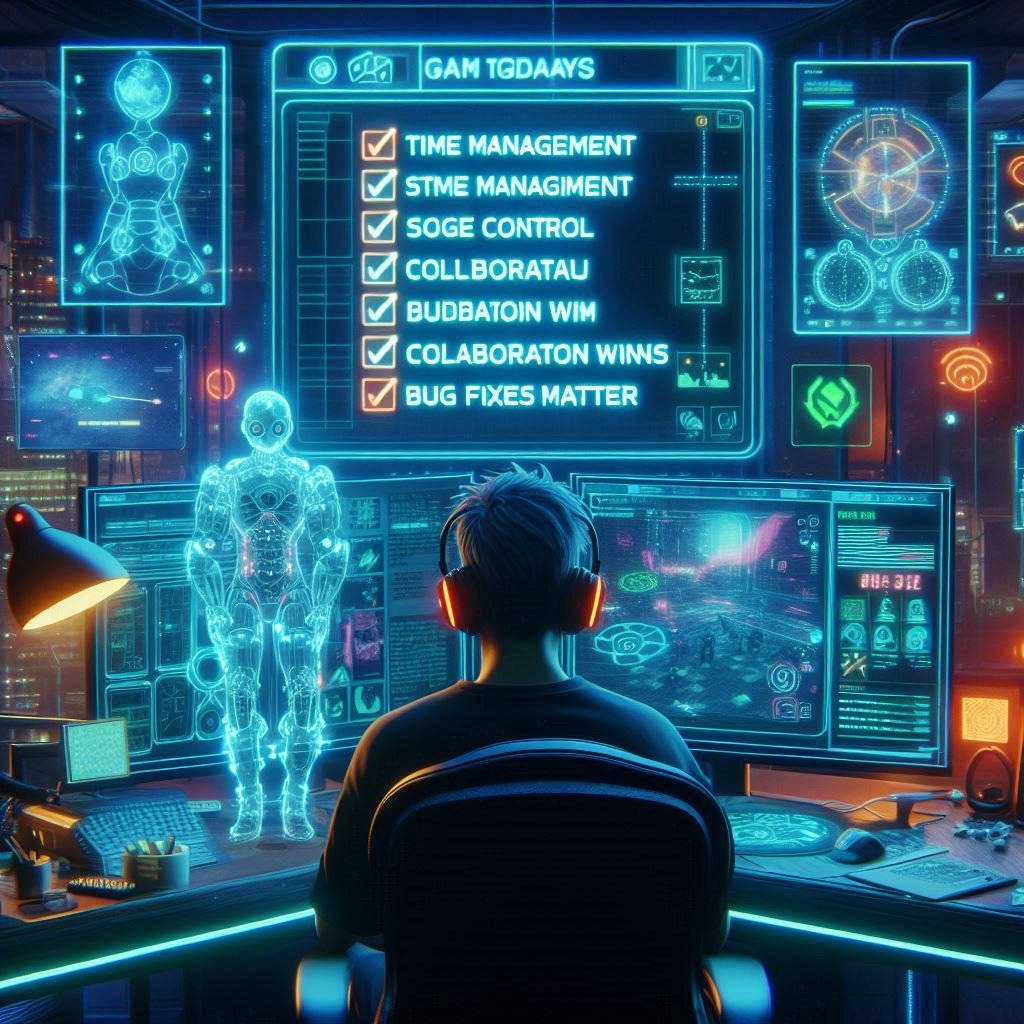
The biggest challenge was time management. I spent too much time perfecting the art assets early on, which left me scrambling to finish the gameplay mechanics. I was so caught up in making the player sprite look just right that I nearly ran out of time to code the enemy AI. In the end, I had to prioritize the core gameplay loop and sacrifice some visual polish—think placeholder sound effects and slightly wonky wall textures. It wasn’t ideal, but it forced me to focus on what mattered most: making the game fun to play. Next time, I’ll save the pixel-perfect art for the victory lap.
What you’d do differently next time.
Next time, I’ll focus more on getting the gameplay solid before worrying about the visuals. I also learned the importance of setting smaller milestones throughout the jam to ensure I’m making steady progress—like having a playable prototype by day one, even if it’s ugly. I’d also sketch out a rough schedule ahead of time, maybe even with little alarms to keep me on track. Oh, and I’ll definitely avoid the trap of over-scoping—I got lucky this time, but those big ideas almost sank me. Keeping it simple from the start will give me more room to polish what’s there.
Would you participate again?
Absolutely! Despite the challenges, I had a blast participating in [Game Jam Name]. The experience taught me a lot about working under pressure, scoping projects, and problem-solving on the fly. There’s something magical about watching an idea go from a messy sketch to a working game in such a short time—it’s exhausting, but it’s a high I’m already chasing again. I’m already looking forward to the next one, maybe even with a team to bounce ideas off of. Bring on the next theme!
Final Thoughts
Participating in a game jam is always a rollercoaster, but it’s one of the best ways to grow as a game developer. If you’ve never tried one, I highly recommend it! The adrenaline, the late-night coding sessions, the moment you hit "submit"—it’s an experience that’ll push you to your limits and leave you with something tangible to show for it. And if you have, I’d love to hear about your experiences in the comments below—what was your theme, and how did you tackle it? Also, feel free to check out my game and let me know what you think! I’m still buzzing from the whole process, and I’d love to swap war stories with anyone who’s been through the game jam gauntlet. Here’s to more sleepless nights and pixelated triumphs!